Key Takeaways
- India generates serious volumes of superalloy scrap from refinery turnarounds, power plant overhauls, aviation MRO and defence maintenance — most of it still sold at generic per-kilo rates.
- Inconel 718/625, Hastelloy C276/C22, Waspaloy and INCO 800-series are the highest-value streams leaving Indian plants.
- International buyers price against LME nickel and verified chemistry; local per-kilo quotes usually leave 30-50% of the value on the table.
- Clean segregation, XRF verification and export-ready documentation are what move Indian lots to world pricing.
- ABCOM buys superalloy scrap across India and handles inspection, grading and export logistics end to end.
Table of Contents
- Why Indian Superalloy Scrap Sells Below Value
- Where India's Superalloy Scrap Comes From
- The Grades That Sell Best From India
- What Buyers Verify Before Pricing
- How Pricing and Settlement Work for Indian Sellers
- Exporting Superalloy Scrap From India
- Working With ABCOM From India
- Frequently Asked Questions
Superalloy Scrap Buyers in India: A Seller's Guide
India runs one of the largest industrial maintenance cycles in the world. Refineries, petrochemical complexes, thermal and gas power stations, aviation MRO lines and defence depots all replace high-value nickel and cobalt components on fixed schedules — and the material they strip out is superalloy scrap, some of the most valuable recyclable metal on the market.
The problem: most Indian sellers still sell it by the kilo, as "mixed alloy" or "stainless", at local rates that ignore what the material actually is. International buyers pay against verified chemistry and world metal prices. The gap between the two is regularly 30-50%.
This guide explains where India's superalloy scrap comes from, which grades carry the most value, what buyers verify before pricing, and how to move a lot from local per-kilo rates to world prices.
Why Indian Superalloy Scrap Sells Below Value
Three habits cost Indian sellers the most.
Per-kilo pricing. A local quote per kilo for "mixed nickel scrap" blends Inconel 718 solids, Hastelloy sheet and low-value stainless into one number — always the worst plausible composition, minus a safety margin.
Blended lots. Combining "similar-looking" alloys into one container forces the buyer to price the whole lot conservatively and sort afterwards. The seller pays for that sorting twice — once in price, once in delays.
Missing documentation. Without composition certificates, photographs and clean weights, export buyers must discount for the unknown. Documents are not paperwork overhead; they are the pricing mechanism.
The correction in each case is the same: segregate by grade family, verify composition, document everything. Our superalloy scrap grading guide walks through identification grade by grade.
Where India's Superalloy Scrap Comes From
Knowing the source tells you the grade before any test — and helps you present material the way buyers price it.
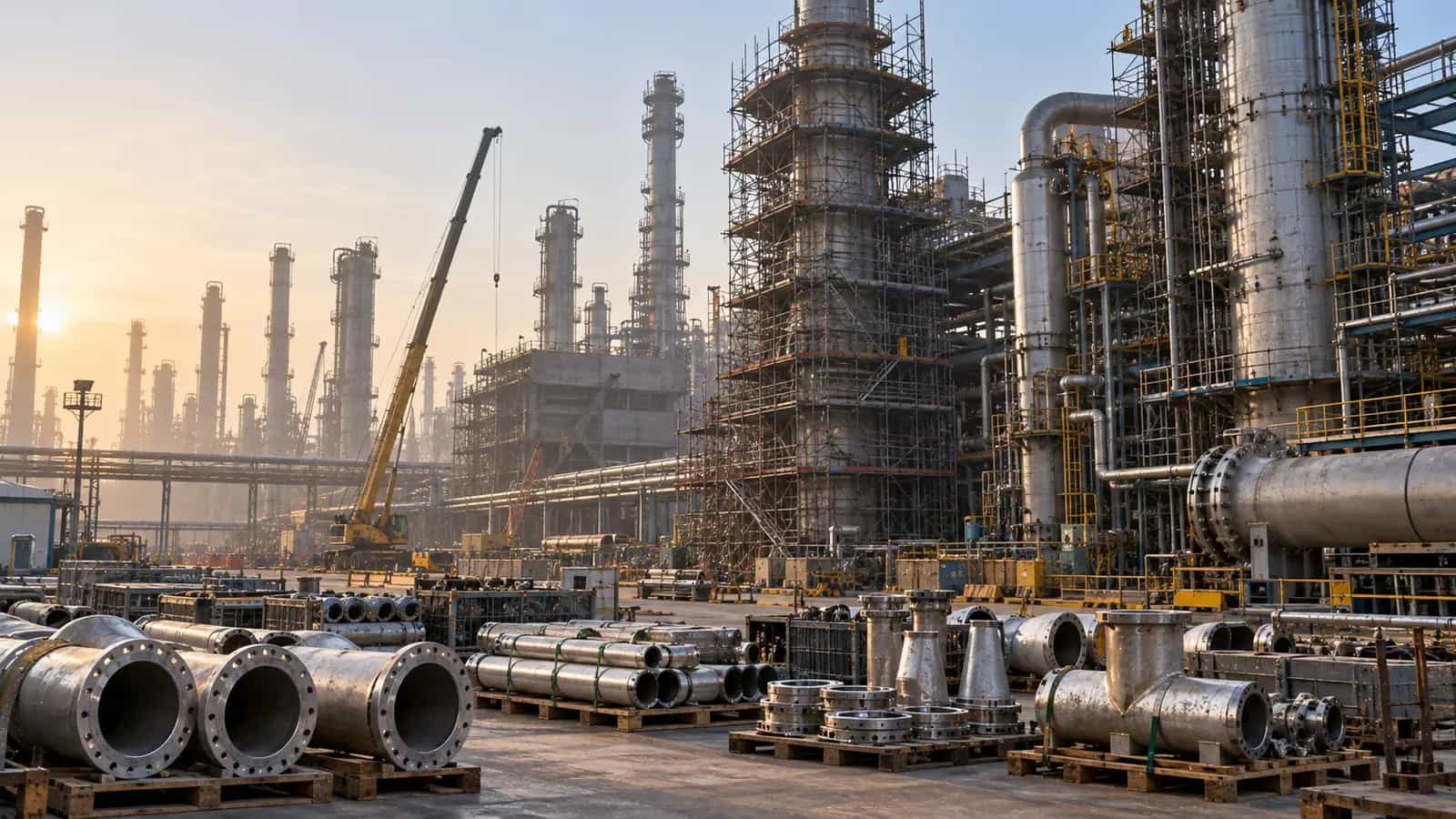
Refinery and petrochemical turnarounds. India's refining and petrochemical complexes strip furnace components, reformer tubes, exchanger hardware and valve parts in INCO 800-series, Hastelloy C-family and Monel during shutdown campaigns. Turnaround material is high volume and time-pressured — the exact situation where fast local quotes beat patient export pricing, and where sellers lose the most.
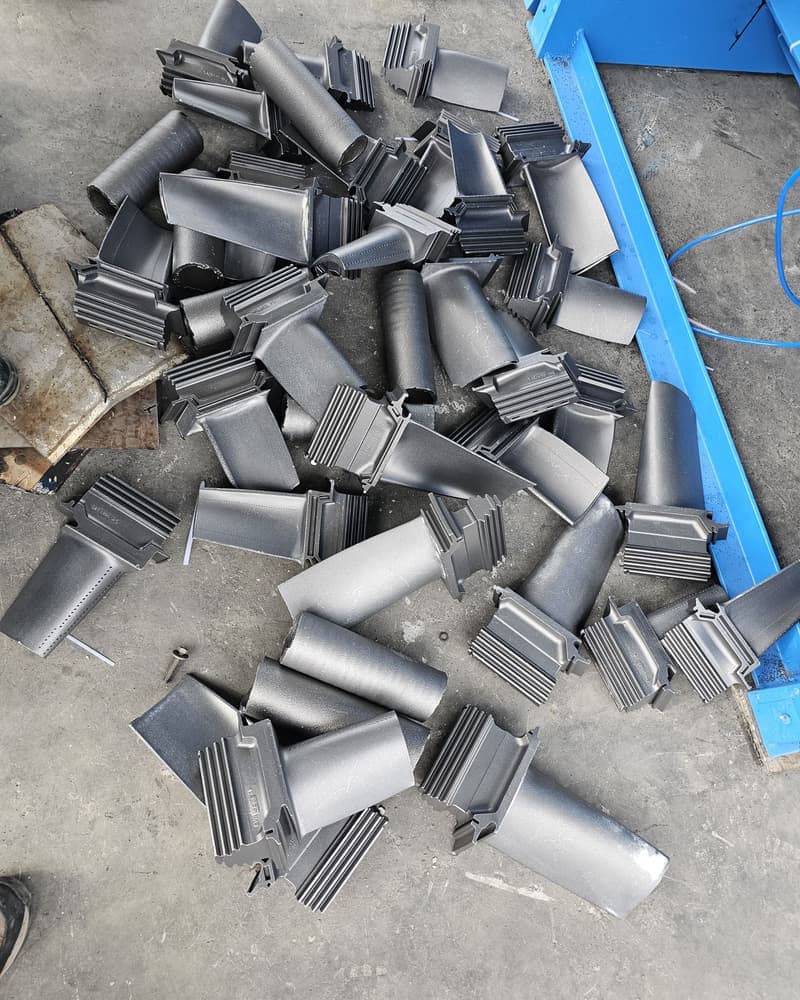
Power generation. Gas turbine hot-section hardware, generator components and boiler parts generate nickel-based and cobalt-bearing scrap — turbine disks and blades alone can hold INCO 718, Waspaloy and Rene-grade material in a single overhaul.
Aviation MRO. India's fast-growing MRO sector — engine overhaul, landing gear and component shops — produces Waspaloy fasteners, INCO 718 disks and titanium parts in smaller but very high-grade volumes.
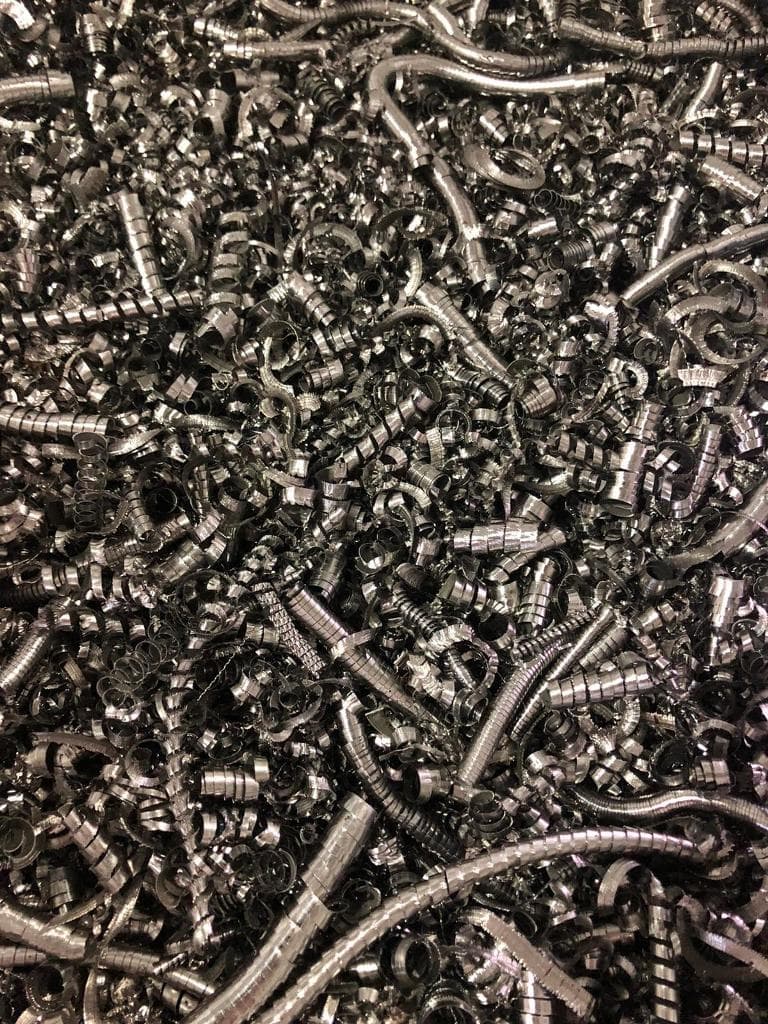
Machine shops and forging units. Turnings and solids from machining Inconel, Monel and Hastelloy are often accumulated over years and stored unlabelled. Sorted and verified, these turnings have a ready international market. Our Inconel 718 & 625 and Hastelloy C276 & C22 pages cover the two most common shop streams.
Defence and PSU maintenance. Naval, rail and heavy-engineering depots replace Monel, INCO and pure-nickel components on long cycles — often in the form of clean solids that price near the top of the band.
The Grades That Sell Best From India
| Grade family | Typical Indian sources | Why it commands a premium |
|---|---|---|
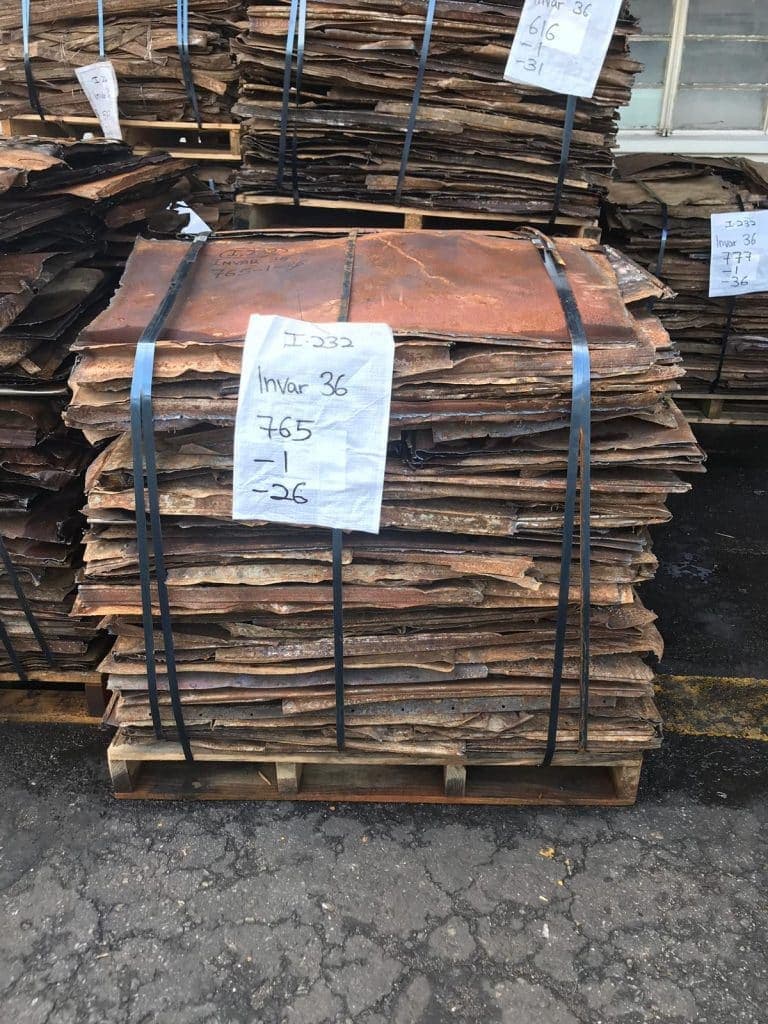
| Inconel 718 & 625 | Turbine hardware, oilfield and valve components, aerospace parts | Constant global melt demand; the benchmark nickel superalloy streams |
| Hastelloy C276 & C22 | Chemical plant reactors, exchanger bundles, FGD hardware | High molybdenum/tungsten content holds re-melt value |
| INCO 600/800/825 | Reformer and furnace components, heat treatment fixtures | Straightforward nickel-chromium-iron chemistry, easy re-melt |
| Monel 400/K500 | Desalination and marine fittings, pump shafts | Nickel-copper demand from offshore and desalination buyers |
| Waspaloy & Rene grades | Jet engine disks, rings, hot-section fasteners | Cobalt-bearing revert demand from engine makers |
| Pure nickel & Nichrome | Plating anodes, resistance wire, furnace elements | Trades close to nickel market levels when verified |
The most common misidentification we see from Indian sources: Nichrome and INCO 800-series sold as stainless. If material came from furnace, turbine or chemical service, assume it is alloy until an XRF reading proves otherwise — our high nickel scrap guide covers the identification traps in detail.
What Buyers Verify Before Pricing
Professional buyers run the same sequence on any Indian lot:
- Family separation — nickel-based, cobalt-bearing and iron-based material sorted into distinct lots
- Compositional verification — XRF per lot, with spark OES backup where grades sit close together (718 vs 625, C276 vs C22)
- Form classification — solids, turnings, sheet and tubing priced separately because recovery economics differ
- Contamination check — steel attachments, weld filler, tooling and plating residue identified and removed
- Documentation — composition certificates, photographs and verified weights per lot
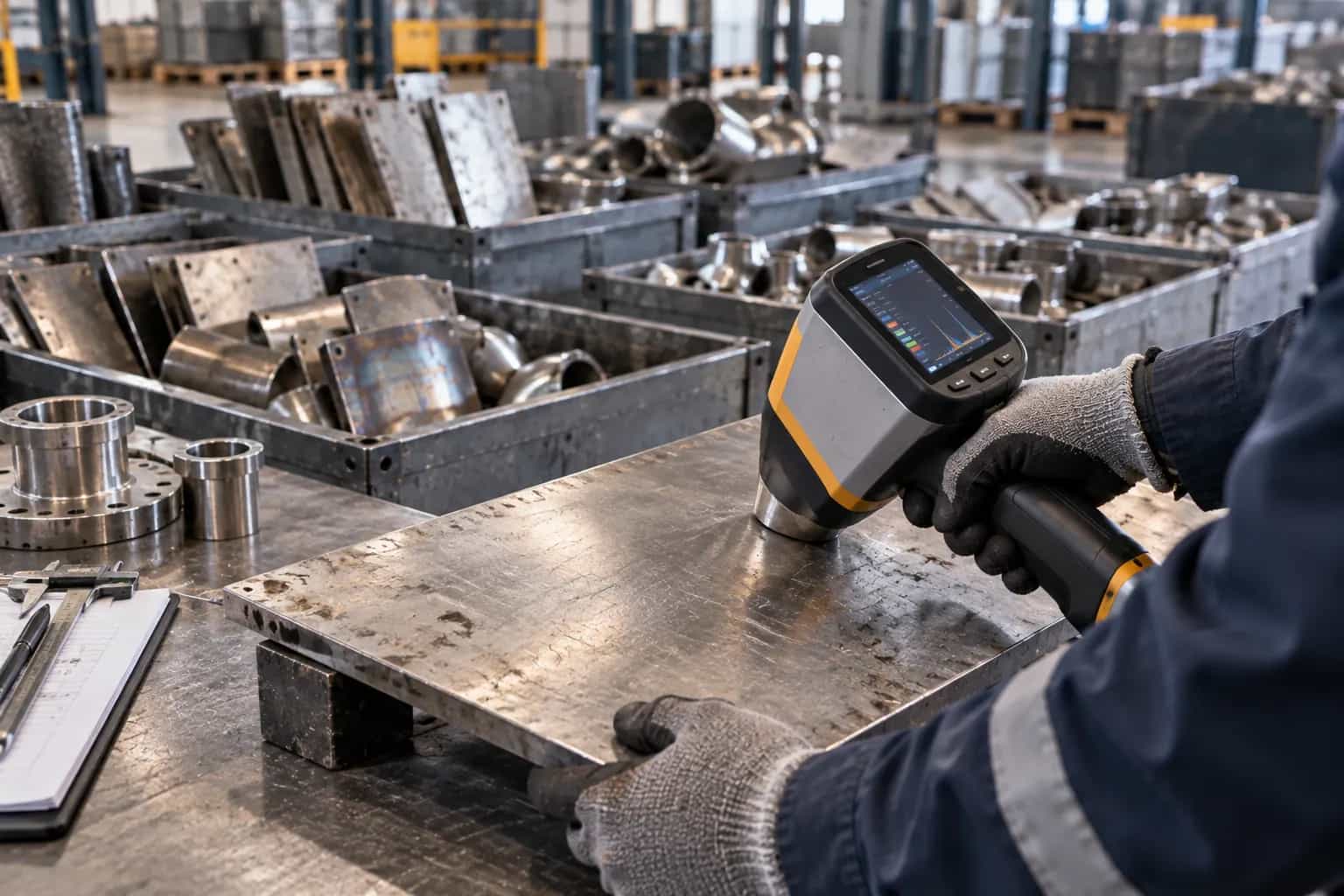
If a buyer skips these steps and simply quotes per kilo, the quote is a discount, not a price. Verification is what converts unknown metal into a specific commodity a mill will accept — the same process we describe in our turbine scrap page for engine hardware.
How Pricing and Settlement Work for Indian Sellers
Pricing basis. Nickel-family material prices against LME nickel adjusted for exact chemistry, form and recovery cost; cobalt-bearing grades add the cobalt component. Quotes are time-stamped because metals move daily.
Settlement. Smaller lots settle at a fixed price on inspection. Larger or recurring streams can settle on assay after arrival with agreed deductions — usually a better net number for the seller in exchange for a short delay. Whatever the structure, the settlement basis (weights, assay, photos) should be shared with you in full.
Currency. International buyers quote and settle in USD, which removes local price ceilings; your bank converts at the prevailing rate.
Exporting Superalloy Scrap From India
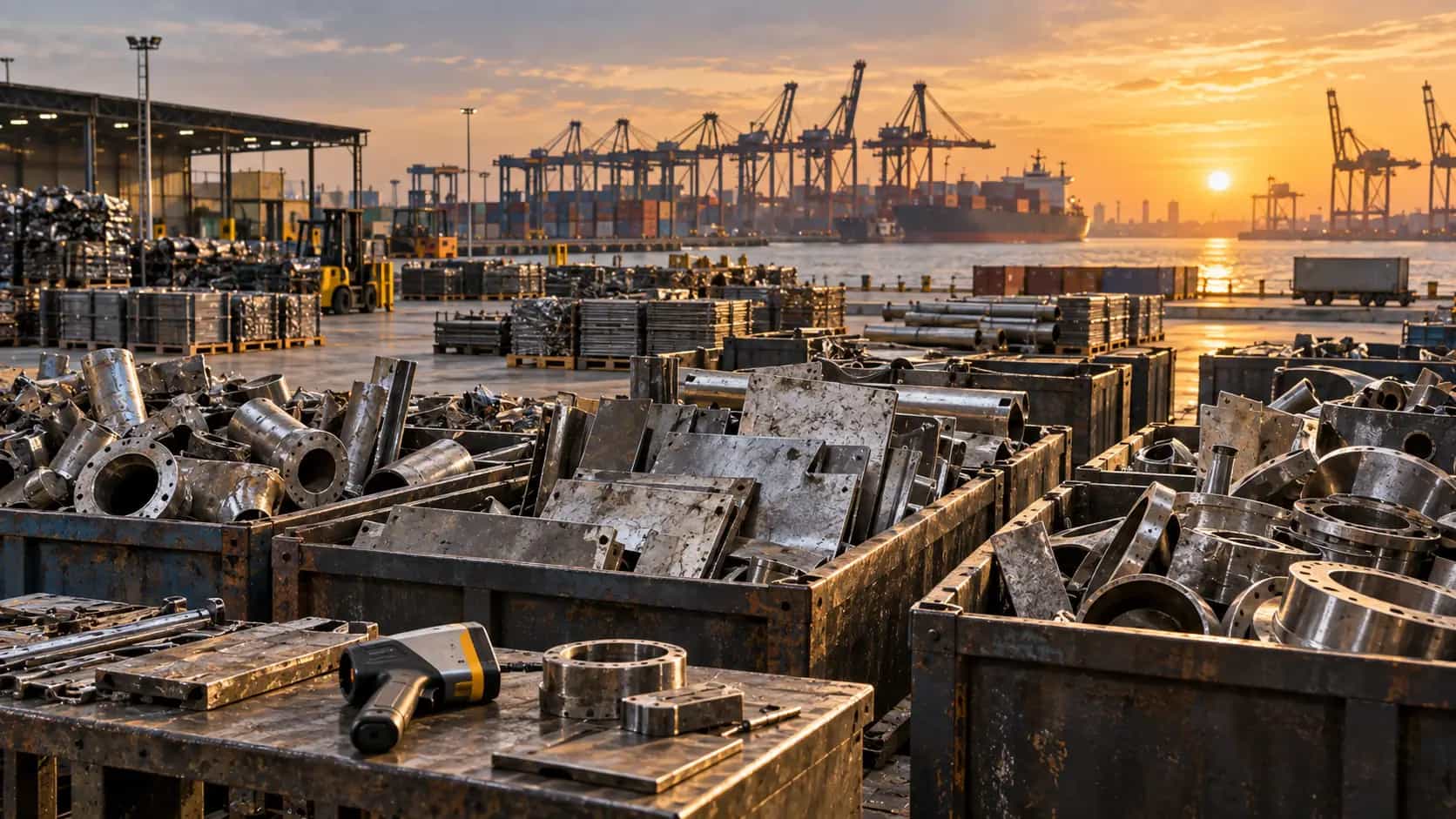
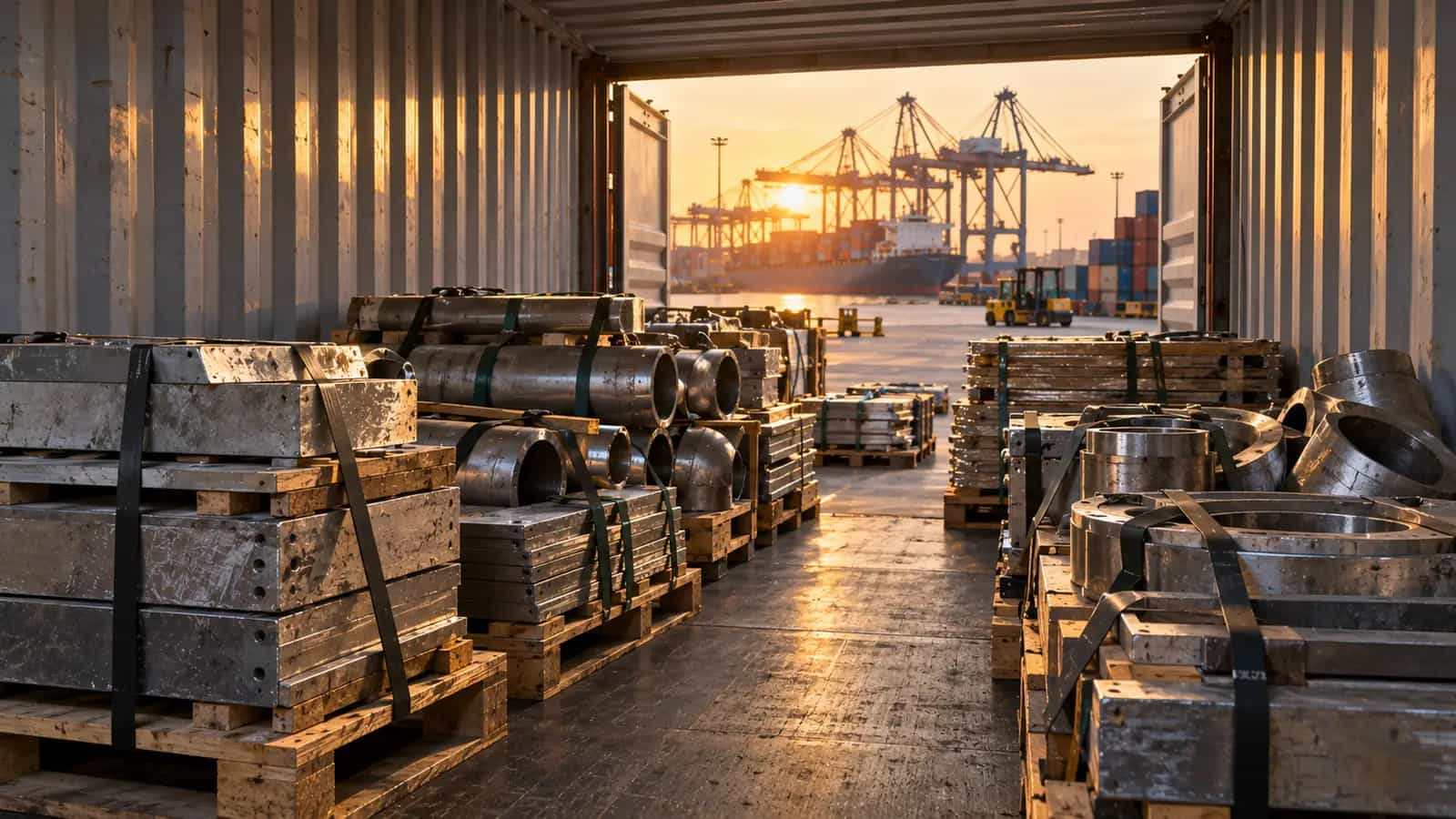
Specialty alloy scrap in non-ferrous families is regularly exported from Indian ports — Nhava Sheva, Chennai, Mundra and Kandla all move alloy scrap containers routinely. The working set is a commercial invoice, packing list, certificate of origin and material composition documentation.
When ABCOM buys from India, we prepare the export set, arrange container loading supervision where the lot warrants it, and share composition certificates with the seller for their records. Because we trade and process rather than broker, grading decisions happen inside our own facilities — your price reflects verified composition, not a middleman's guess.
Working With ABCOM From India
We buy superalloy scrap from across India — single pallets to full decommissioning lots. Send photographs, approximate weights and location; receive a same-week indication; material is inspected and graded (on site for larger lots); shipment moves through our Singapore or Turkish bases with complete documentation.
Start with the grade pages above, review the UAE & GCC seller guide if your material is in the Gulf, or go straight to the contact desk with your lot details.
Frequently Asked Questions
Who buys superalloy scrap in India?
Specialist international buyers — traders and processors like ABCOM — buy Indian superalloy scrap against world metal prices. Local per-kilo buyers exist but price mixed material conservatively. For nickel-bearing grades, an international offer verified by XRF is almost always higher.
What is superalloy scrap worth per kg in India?
It depends on grade, form and nickel/cobalt content — Inconel 718 solids price far above mixed stainless, for example. Serious buyers quote per lot after photographs and quantities are reviewed. Flat per-kilo quotes without verification are almost always low.
Can I export alloy scrap from India, and what documents are needed?
Yes — non-ferrous alloy scrap is routinely exported. The usual set is a commercial invoice, packing list, certificate of origin and material composition documentation. When buying, ABCOM prepares the export set and supervises loading where warranted.
How do I identify Inconel scrap versus stainless steel?
Visually they can look identical. XRF analysis settles it in seconds. A practical rule for Indian sellers: material from turbine, furnace, valve or chemical service is alloy until proven otherwise.
Can mixed alloy lots still be sold at good prices?
Yes, but expect conservative pricing until the lot is sorted and verified. Sending an estimated composition breakdown with photographs before quoting materially improves the offer — segregation at source is the cheapest upgrade a seller can make.