Hastelloy C276 vs C22 Scrap: Grades, Identification and Seller Guide
Key Takeaways
- Hastelloy C276 and C22 are both nickel-chromium-molybdenum corrosion alloys, but they are not interchangeable at the scrap stage. C22 carries more chromium for oxidising environments, while C276 carries more molybdenum and tungsten for reducing conditions.
- The two grades can look almost identical after machining or decommissioning. Composition testing with XRF, supported by mill records and OES where needed, is what makes a grading defensible.
- Form matters: clean solids, plate, pipe and forgings are usually easier to inspect and route than turnings, mixed fittings or material with attached steel.
- Contamination, coatings, attachments and mixed lots reduce value more than anything else. Segregation by grade and form protects price.
- Sellers who send photographs, weights, origin and any available chemistry get faster and more accurate indications from a specialist buyer.
Hastelloy scrap comes from some of the most corrosive industrial environments in the world: chemical reactors, acid service piping, scrubbers, heat exchangers and flue-gas systems. Because these alloys are expensive to produce, decommissioned equipment and offcuts retain significant value. The commercial mistake is treating all Hastelloy material as one generic "nickel scrap" commodity, or guessing between C276 and C22 without evidence.
For sellers, the central question is which grade the material actually belongs to, how cleanly it is separated and whether the composition can be demonstrated. Those three factors determine how a specialist buyer routes the lot, what melt controls it needs and what price it can support.
What Is Hastelloy Scrap?
Hastelloy scrap is surplus or end-of-life material from the Hastelloy family of nickel-based corrosion-resistant alloys, most commonly C276, C22, B-2/B-3 and X grades. It originates from chemical processing plants, pollution-control equipment, oil and gas service, and aerospace components, and it is valued for its recoverable nickel, chromium, molybdenum and tungsten content.
The Hastelloy family is designed for environments that destroy ordinary stainless steels: hot acids, oxidising chlorides, wet chlorine, seawater and sulfur-bearing media. That is why the alloys carry high nickel for matrix stability, chromium for oxidising resistance and molybdenum for reducing-acid resistance.
These same elements are what make the scrap valuable. But they are also what make grading strict. A mixed lot of C276, C22 and stainless offcuts cannot be sold as one grade, because the remelt chemistry of each grade is tightly specified at the mill.
C276 vs C22: What Is the Difference?
C276 and C22 are closely related nickel-chromium-molybdenum alloys, but C22 contains noticeably more chromium and less molybdenum, which shifts its corrosion resistance toward oxidising media, while C276 holds more molybdenum and a tungsten addition for reducing conditions. Both are versatile, but neither is a substitute for the other in a certified remelt stream.
The practical differences at the scrap stage:
| Property | Hastelloy C276 | Hastelloy C22 |
|---|---|---|
| Alloy system | Nickel-chromium-molybdenum with tungsten | Nickel-chromium-molybdenum, higher chromium |
| Corrosion strength | Reducing media, wet chlorine, sulfuric and hydrochloric service | Oxidising media, mixed acid service, wet chloride environments |
| Typical origin | Chemical reactors, heat exchangers, scrubber internals | Acid service equipment, pharmaceutical and FGD systems |
| Fabrication | Widely used in welded vessels and piping | Often used where weld-zone corrosion resistance is critical |
| Scrap handling | Frequently found as plate, pipe and vessel sections | Frequently found as plate, fittings and welded assemblies |
What this means for sellers is simple: if you have both grades in one lot, they must be separated before quotation. A buyer purchasing certified C276 remelt stock cannot accept a blend that dilutes the molybdenum and tungsten content, and a buyer purchasing C22 cannot accept a blend that dilutes the chromium.
Which Hastelloy Grades Appear in Scrap?
The Hastelloy family is broader than the two headline grades, and material from decommissioning projects often contains several of them:
- C276 (UNS N10276) — the most widely recognised grade, common in chemical processing equipment, vessels, piping and flue-gas scrubbers.
- C22 (UNS N06022) — a later-generation grade with higher chromium, common in mixed-acid service, pharmaceutical equipment and pollution-control systems.
- B-2 and B-3 (UNS N10665 / N10675) — high-molybdenum, low-chromium grades for hydrochloric acid service; chemically very different from the C family and never blended with it.
- X (UNS N06002) — a nickel-chromium-iron-molybdenum grade for high-temperature service, closer to aerospace and furnace applications.
- C-4, G-3 and G-30 — specialty grades from older equipment or specific acid services.
Each of these families has a different remelt specification. B grades, in particular, must be kept completely separate from C grades, because their molybdenum-to-chromium balance is opposite. If your lot contains equipment from different plant sections or different decades, assume it may contain more than one grade until testing proves otherwise.
How Is Hastelloy Scrap Identified?
The reliable way to identify Hastelloy scrap is to combine source records, physical inspection and compositional testing. XRF screening separates the nickel-chromium-molybdenum family from stainless steels and from B grades quickly, while spark OES or laboratory analysis resolves close calls between C276 and C22.
Start with documentation. Mill certificates, heat numbers, vessel datasheets, piping specifications and maintenance records often name the grade directly. Decommissioning paperwork from chemical plants is especially useful, because Hastelloy equipment is normally specified and purchased by grade.
Physical inspection adds context: plate thickness, weld preparation, vessel construction and equipment type all suggest which grade family is likely. But appearance cannot separate C276 from C22, because both are silvery, corrosion-resistant and visually identical after machining.
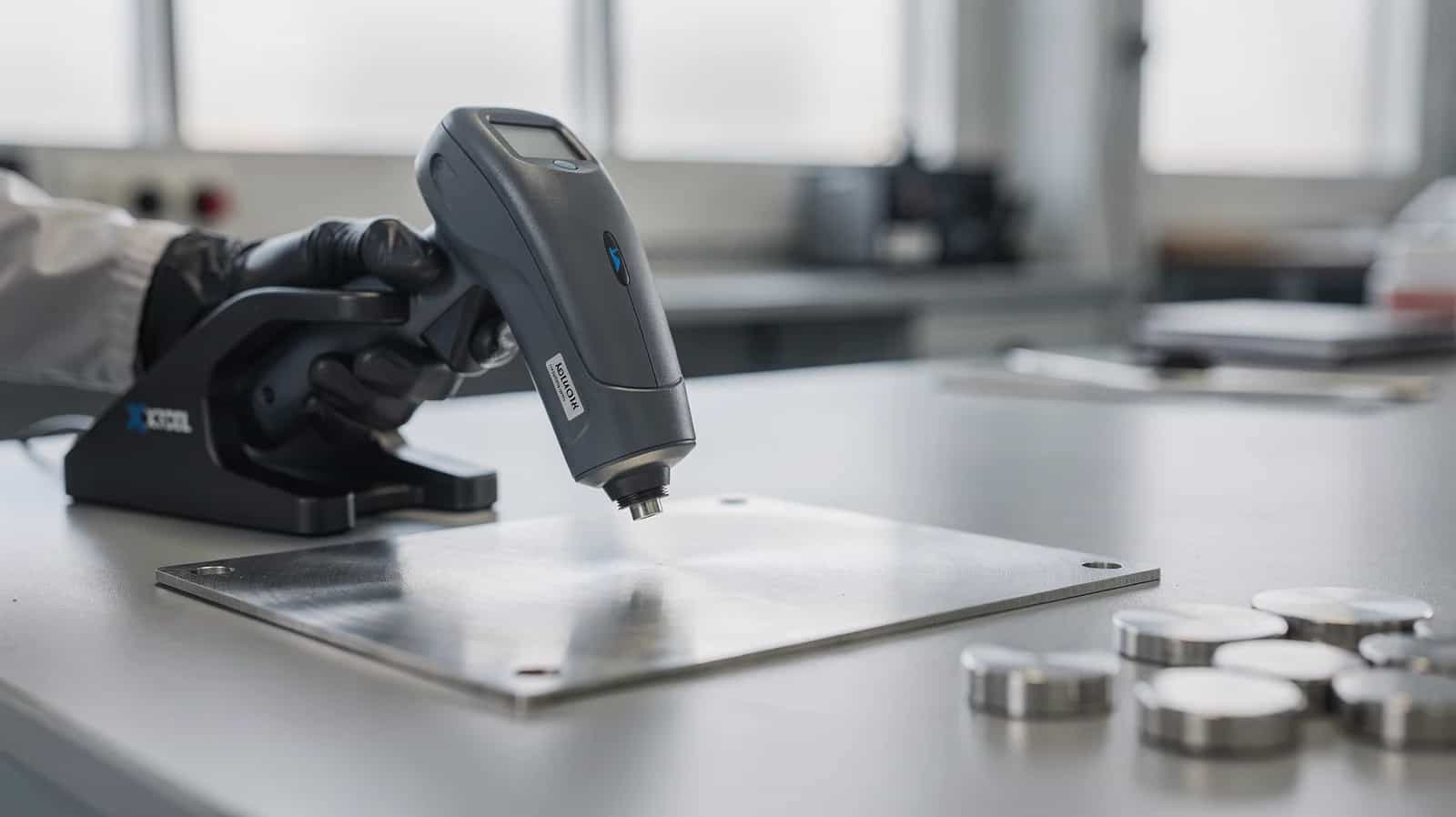
XRF provides the working answer. A handheld analyser reads nickel, chromium, molybdenum, tungsten and iron content in seconds and reliably separates Hastelloy from stainless steel, from Inconel-type alloys and from B grades. Because C22 has a higher chromium content and C276 has a higher molybdenum-tungsten balance, XRF can also distinguish between the two grades when the surface is clean and the reading is taken on bare metal.
When a specification requires tighter chemistry, or when readings are affected by coatings and oxidation, buyers may request spark OES or laboratory confirmation on representative samples. The goal is not a report for every piece. It is enough defensible evidence that each commercial lot can be certified to the correct remelt stream.
Which Forms of Hastelloy Scrap Are Valuable?
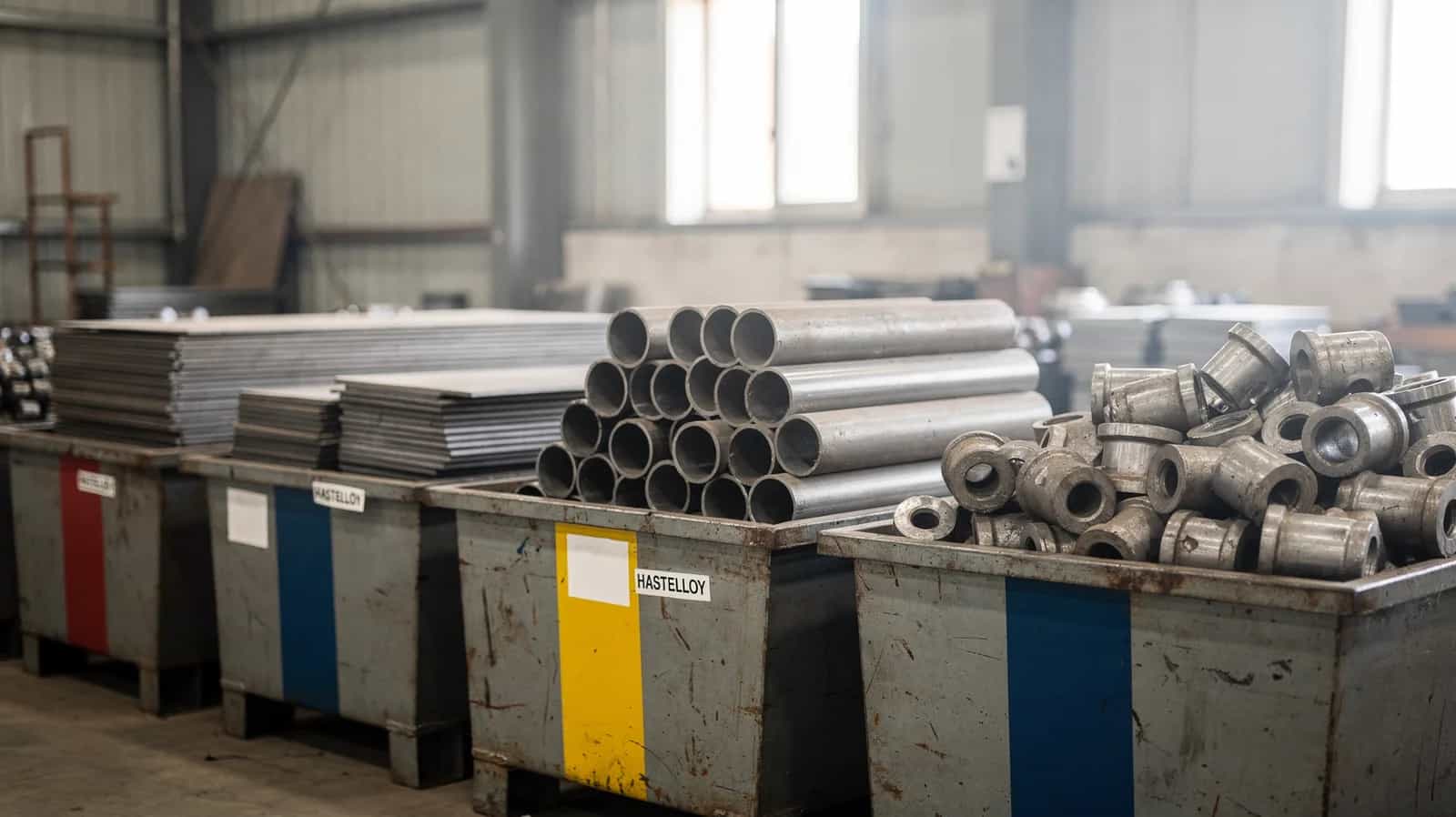
The same grade can command different commercial treatment depending on form. Clean, dense, well-documented material is easier to inspect, sample and route than mixed or contaminated lots.
Common forms include:
- Plate and sheet offcuts from vessel fabrication and equipment manufacture
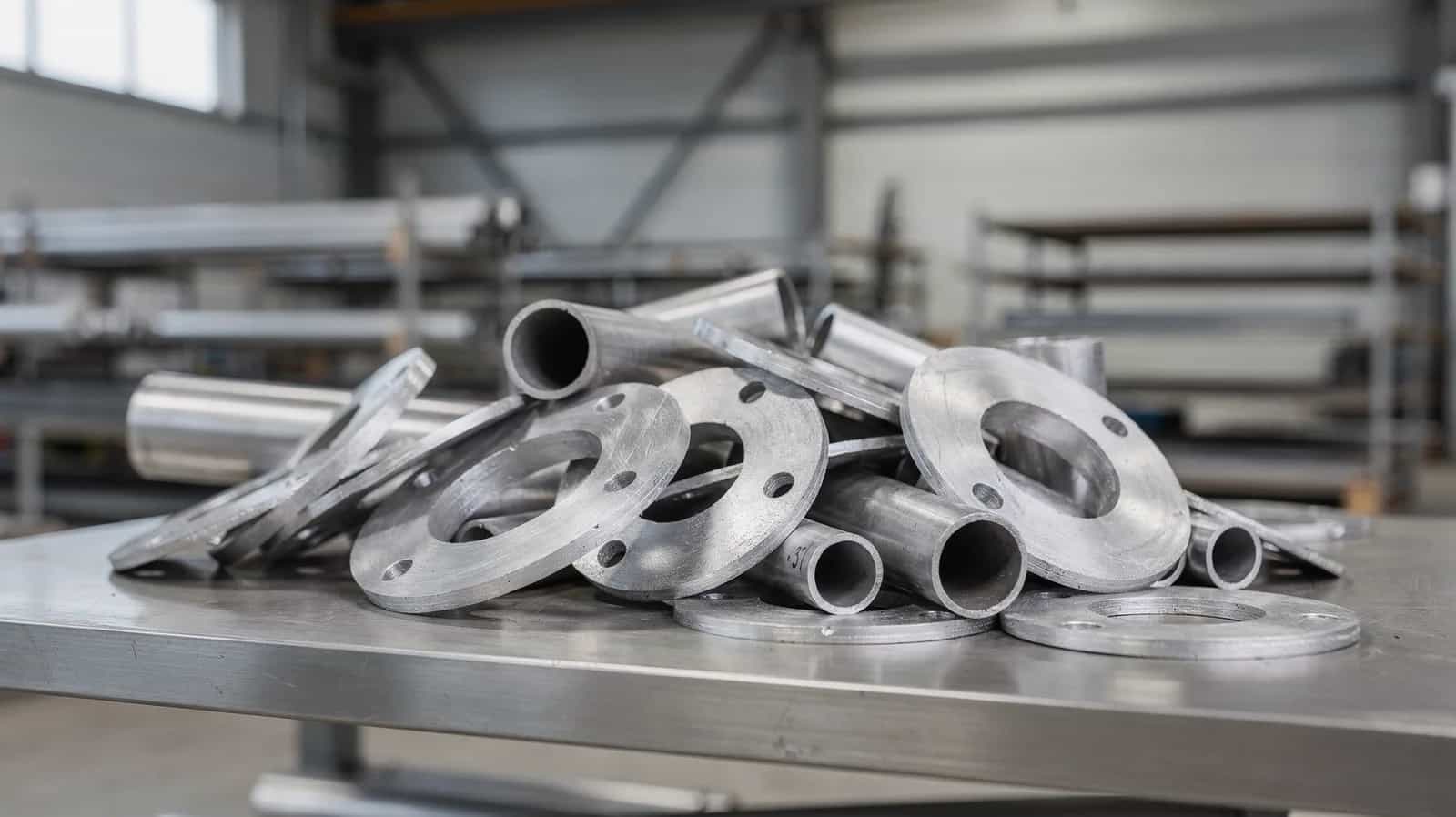
- Pipe and tube sections from acid service and heat-exchanger systems
- Flanges, fittings and weld elbows from decommissioned piping runs
- Vessel shells, heads and internals from chemical reactors and scrubbers
- Machined components and forgings from pump and valve manufacture
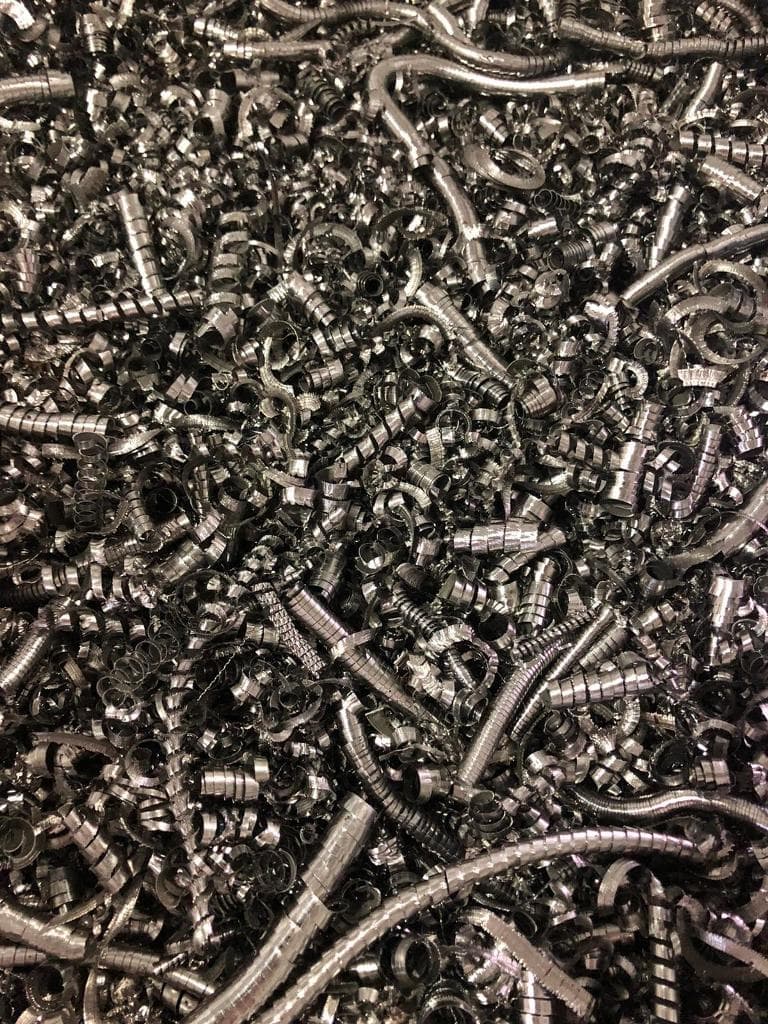
- Turnings and machining swarf from alloy machining operations
Turnings remain valuable, but they carry more risk: oil, coolant, steel chips from tooling and mixed chip types affect recovery and processing cost. Solids with traceable origin are usually the strongest starting point for a seller.
Attachments matter. Steel flanges, bolted connections, gaskets, refractory, insulation and weld deposits can dilute a lot or complicate classification. Photograph them, describe them, and never remove anything unsafe or technically significant without understanding its effect on the material description.
How Is Hastelloy Scrap Valued?
Hastelloy scrap is valued from verified chemistry, grade certainty, physical form, contamination, quantity, location and current market conditions. There is no single responsible price per kilogram for every Hastelloy lot, because those variables change the recovery route and the buyer's processing cost.
The main valuation factors are:
- Grade certainty — certified C276 or C22 with documentation supports a stronger commercial position than an unidentified nickel alloy lot.
- Chemistry — the recoverable nickel, chromium, molybdenum and tungsten content drives the remelt value.
- Form — clean solids and plate are easier to process than turnings or mixed fittings.
- Contamination — attached steel, coatings, refractory and foreign alloys reduce value.
- Quantity and logistics — lot size, packing, country and shipping route all affect the final commercial terms.
- Market timing — nickel, molybdenum and cobalt-adjacent pricing move over time, so indications are always dated.
Sellers should be cautious of flat offers made without photographs, weight, origin or inspection information. A credible indication will state what was reviewed, what assumptions were made and whether the price is preliminary or based on confirmed chemistry.
How Should Hastelloy Scrap Be Prepared for Sale?
Preparation begins before the material leaves the plant or warehouse. Segregate known grades, keep B grades separate from C grades, and photograph both the overall lot and representative pieces.
Prepare a short lot brief containing:
- Grade name or suspected family, if known
- Approximate gross and net weight
- Form: solids, plate, pipe, fittings, turnings or mixed
- Country and city of the material
- Photographs of representative pieces and any markings
- Existing XRF, OES, mill certificates or decommissioning records
- Contamination or attachment details
- Preferred timing for inspection, collection or shipment
Do not mix Hastelloy with ordinary stainless, Inconel-type alloys or other nickel alloys to simplify storage. Mixed lots force a buyer to assume the worst case for every grade in the container, and the price reflects that uncertainty. When a lot is genuinely mixed, describe it honestly and let the buyer decide how sampling and sorting should work.
Frequently Asked Questions
What is the scrap price of Hastelloy C276?
There is no single universal price for Hastelloy C276 scrap. The indication depends on verified chemistry, grade certainty, form, contamination, quantity, location and current market conditions for nickel and molybdenum. A specialist buyer normally needs photographs, weight, source information and representative chemistry before giving a defensible number.
Is Hastelloy C276 the same as Inconel?
No. Hastelloy C276 and Inconel are different nickel alloy families. Hastelloy C276 is a nickel-chromium-molybdenum alloy with tungsten, designed for severe corrosion service, while Inconel grades are nickel-chromium or nickel-chromium-iron alloys designed for strength and oxidation resistance at high temperature. They may both be nickel-based, but their remelt specifications and applications are different, and they should be sorted separately.
Which is better, C22 or C276?
Neither is universally better. C22 carries more chromium and performs strongly in oxidising media and mixed-acid environments, while C276 carries more molybdenum with a tungsten addition and performs strongly in reducing conditions such as wet chlorine and certain acid services. For scrap purposes, the question is not which is better but which grade the material actually is, because buyers certify each grade to its own remelt specification.
How can I tell if scrap is Hastelloy rather than stainless steel?
Stainless steel is magnetic or weakly magnetic and lacks the high nickel content of Hastelloy. Hastelloy is non-magnetic and noticeably denser. XRF screening gives a definitive answer in seconds by reading the nickel, chromium, molybdenum and tungsten content. Source records, such as vessel datasheets and piping specifications, also confirm the grade before testing.
What should I send a buyer before requesting an indication?
Send the suspected grade or application, photographs, approximate quantity, location, physical form, contamination details and any XRF, OES, mill certificates or decommissioning records. If the lot is mixed, say so clearly. A complete first description reduces unnecessary back-and-forth and helps the buyer decide what inspection is needed.
Discuss a Hastelloy Scrap Lot With ABCOM
ABCOM sources and processes specialty Hastelloy alloys for chemical processing, oil and gas, pollution-control and aerospace applications. If you have Hastelloy C276 or C22 scrap, B-grade material, turnings, plate or decommissioned equipment, send the grade information, photos, quantity and location through the contact page.
For related material information, see ABCOM's Hastelloy C276/C22 scrap page, high-nickel scrap programme, turbine scrap programme and superalloy processing guide.
This guide is general material information, not a binding price quotation. Final classification and commercial terms depend on inspection, verified chemistry and the agreed lot description.