Tool Steel Processing
Hot Working Steels Processing
& Global Supply
Operating from Singapore, ABCOM sources, processes, and supplies hot working steels globally. H13 and H11 tool steel grades engineered for thermal fatigue resistance serve forging, die casting, and extrusion applications across industrial manufacturing. Our 25-year track record in specialty metal flows underpins every transaction.
Material Overview
What Are Hot Working Steels?
Hot working steels are chromium-molybdenum-vanadium tool steels specifically engineered to withstand repeated thermal cycling, mechanical stress, and abrasion in applications where tooling contacts hot metal. They retain hardness and toughness at elevated service temperatures where standard tool steels would crack or deform under the combined effects of heat and impact. For cutting tool applications, see our high speed steels range.
The chromium content provides oxidation resistance and hardenability, molybdenum contributes high-temperature strength, and vanadium forms stable carbides that resist softening during sustained thermal exposure. This combination produces tool steels capable of thousands of forging or casting cycles before replacement is required.
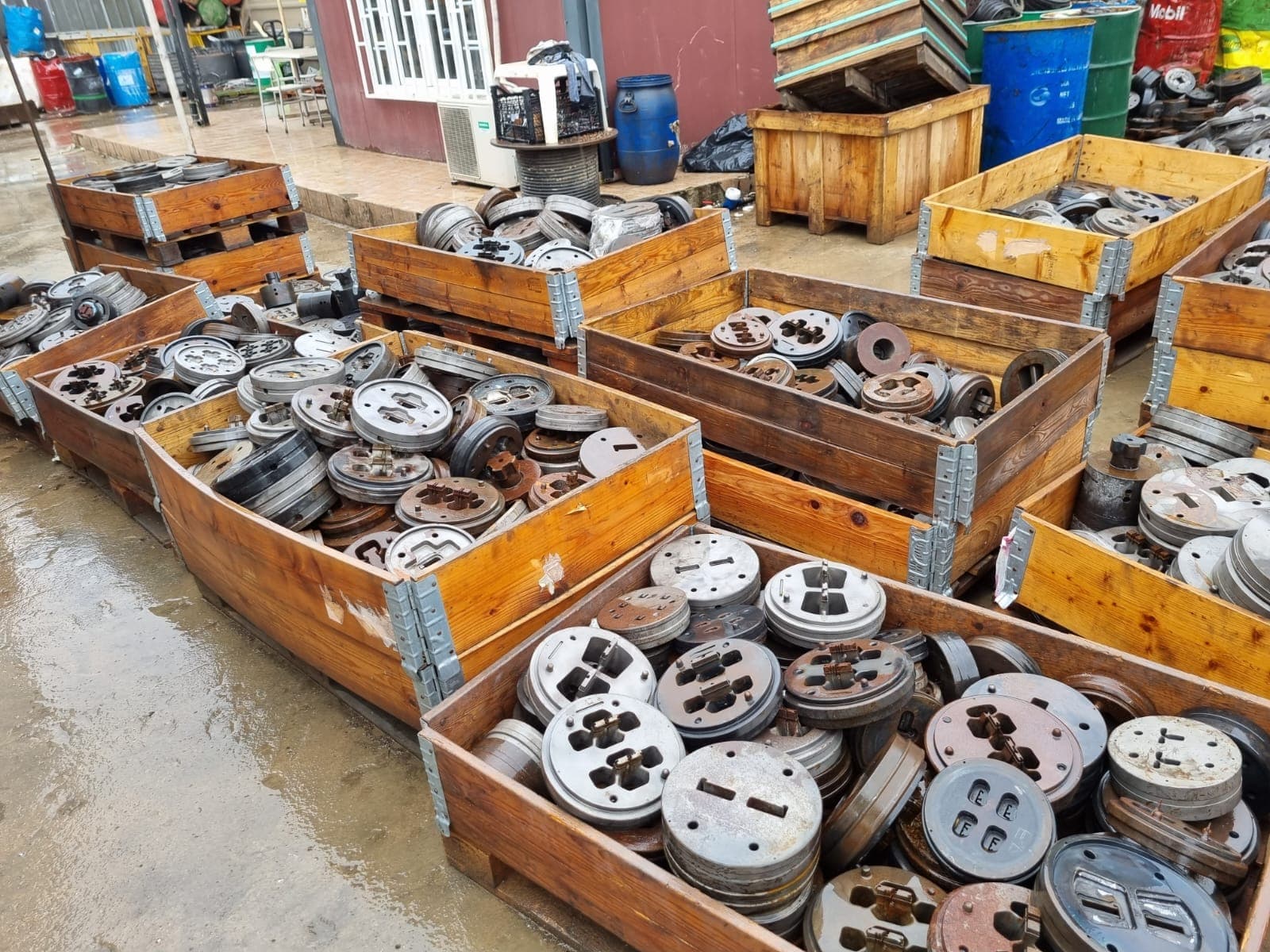
ABCOM trades and processes hot working steel scrap and primary forms including forging dies, extrusion tooling, and die casting moulds from industrial operations globally. Our technical grading capability ensures material is correctly identified by grade before onward sale. See our full product range for available forms.
End Markets
Industries & Applications
Forging
Forging dies, punches and tooling for hot forging of steel, aluminium and titanium components in automotive and aerospace manufacturing operations.
Die Casting
Die casting dies for aluminium, magnesium and zinc components requiring resistance to heat checking and thermal fatigue across high-volume production cycles.
Extrusion
Extrusion dies and tooling for hot extrusion of aluminium profiles, copper and steel sections where sustained contact with hot metal demands thermal stability.
Plastic Moulding
Mould tooling for high-temperature plastic injection moulding applications requiring surface hardness and dimensional stability over extended production runs.
Automotive Manufacturing
Connecting rod forging dies, crankshaft tooling and structural component forming tools for high-volume automotive production lines.
Industrial Tooling
Mandrels, piercing tools and hot shear blades used in steel mill and metal processing operations where tooling contacts hot metal continuously.
Material Categories
Grades We Supply
H13 (AISI H13)
The most widely used hot working steel globally, offering an excellent combination of high-temperature strength, thermal fatigue resistance and toughness. H13 is specified for aluminium die casting dies, forging tools and extrusion tooling where resistance to heat checking is critical. Its balanced chromium-molybdenum-vanadium composition delivers reliable performance across thousands of thermal cycles.
H11 (AISI H11)
A lower-vanadium variant of H13 offering higher toughness at slightly reduced wear resistance. H11 is preferred in applications requiring impact resistance such as forging dies for heavy sections and aerospace structural component tooling. Its superior shock resistance makes it the standard choice for applications where die breakage from mechanical overload is the primary failure mode.
Others
ABCOM handles additional hot working steel grades and tooling forms on inquiry, including specialty H series variants and end-of-life industrial tooling. Contact our team with details of the grade, form, and quantity available.
Our Capabilities
Processing & Recycling
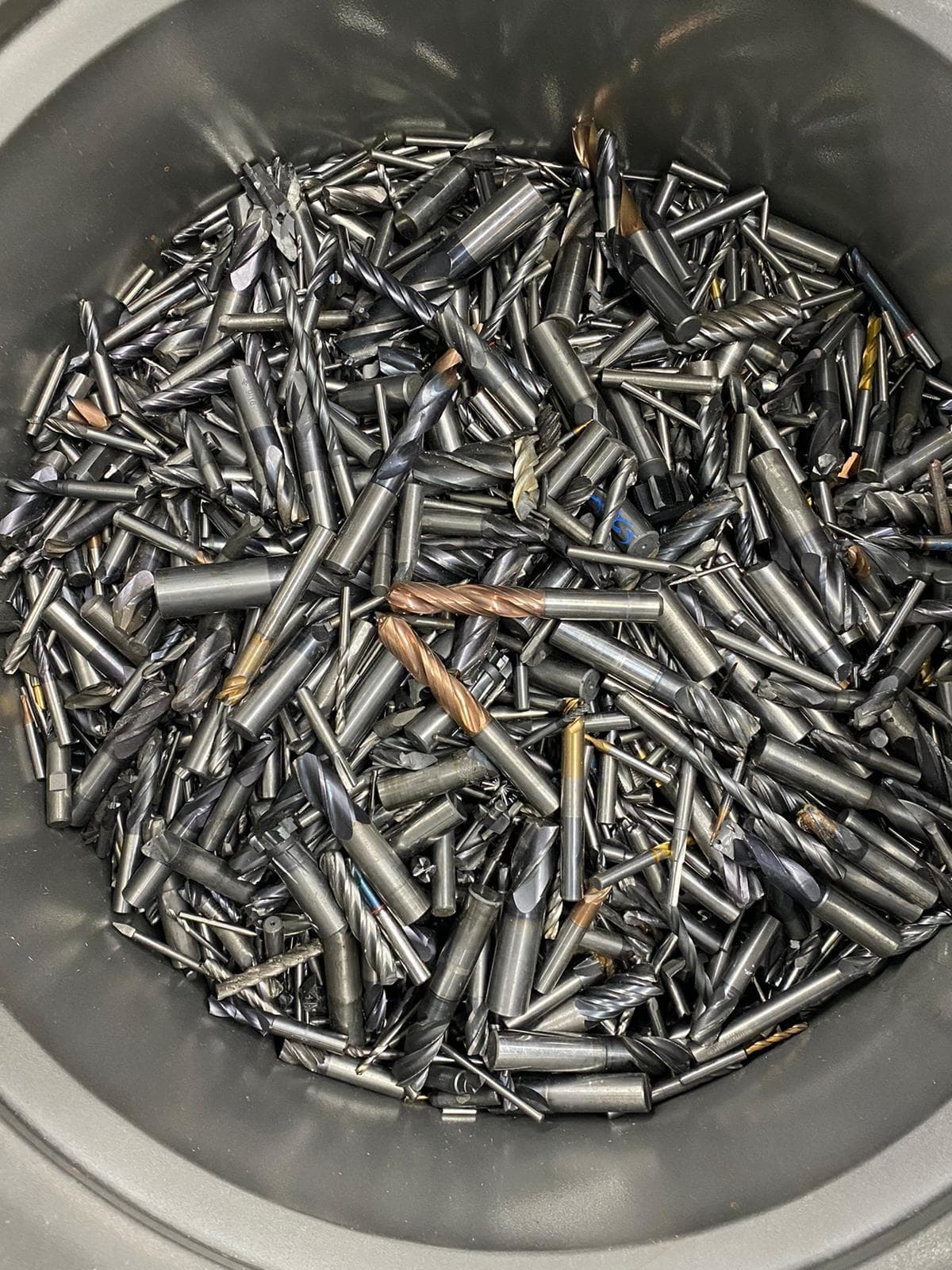
ABCOM processes hot working steel scrap from forging operations, die casting facilities, and industrial tooling sources. Incoming material includes worn forging dies, retired extrusion tooling, and end-of-life die casting moulds, each requiring accurate grade identification before consolidation and onward sale.
Hot working steel scrap is valuable due to the chromium, molybdenum, and vanadium content in H series tool steels. Recovering these alloying elements through correct grading and supply to re-melters is more efficient than primary extraction. H11 and H13 scrap streams must be kept separate due to their different vanadium levels, as mixing grades reduces melt value and compositional accuracy for downstream producers.
Quality control and documentation are applied at each processing stage. Material is traceable from origin through to dispatch, supporting the requirements of tool steel re-melters receiving the material. Learn more about our operations on the about page.
Processing Capabilities
- Grade identification and compositional sorting
- Sorting by grade: H13 and H11 kept separate to preserve melt value
- Scrap processing from forging, die casting, and extrusion operations
- End-of-life tooling recovery and classification
- Quality control and lot documentation
- Global sourcing and procurement across established supply networks
- Export preparation and international logistics coordination
Trading Network
Global Supply from Singapore
Singapore's position as a global trading hub gives ABCOM direct access to metal flows across Asia-Pacific, the Middle East, Europe, and North America. Our operational network allows us to source hot working steel scrap and primary material from manufacturing operations globally and move it efficiently to downstream buyers.
Export markets for our hot working steel material include tool steel producers, die casting equipment manufacturers, and specialty steel re-melters across Europe, the Americas, and Asia. Buyers receive consistently graded H13 and H11 material with competitive pricing based on current chromium, molybdenum, and vanadium market conditions. For extreme-temperature applications beyond tool steel capability, see our super alloys range.
For sourcing inquiries, logistics discussions, or pricing on specific hot working steel grades, contact our Singapore office directly via the contact page.
Why Choose ABCOM
Specialist Expertise, Global Reach
25+ Years Experience
Established in Singapore in 2000, ABCOM has operated through multiple commodity cycles with consistent focus on specialty non-ferrous and tool steel alloys.
International Operations
Offices in Singapore and Turkey, with active trading relationships across Europe, Asia, and the Americas.
Alloy Expertise
Deep technical knowledge of hot working steel grade families including H13 and H11, from identification and sorting through to final sale.
Sustainable Recycling
Recovering chromium, molybdenum and vanadium from tool steel scrap reduces primary mining demand and supports circular supply chains.
Common Questions
Frequently Asked Questions
What are hot working steels used for?
Hot working steels are used to manufacture tooling that contacts hot metal during forming operations. Primary applications include forging dies, die casting moulds, extrusion tooling, hot shear blades, and mandrels. Any process where tooling is subjected to repeated thermal cycling and mechanical stress at elevated temperatures requires hot working tool steel grades.
What is the difference between H11 and H13 tool steel?
H13 contains higher vanadium content than H11, which provides greater wear resistance and improved resistance to heat checking (thermal fatigue cracking). H11 offers higher toughness due to its lower vanadium level, making it better suited to applications with heavy impact loading such as forging dies for large cross-sections. Both grades share a chromium-molybdenum-vanadium base composition optimised for hot work service.
Why is hot working steel scrap valuable?
Hot working steel scrap carries value because of its chromium, molybdenum and vanadium content. These alloying elements are essential for producing new tool steel and are more efficiently recovered from scrap than extracted from primary ore. Properly graded H11 and H13 scrap is a consistent feedstock for tool steel re-melters producing new die steel.
What industries use hot working steels?
The principal industries are forging, die casting, extrusion, plastic moulding, automotive manufacturing and general industrial tooling. Any sector that forms metal at elevated temperatures relies on H series hot working steels for die and tooling longevity.
What is thermal fatigue resistance in tool steels?
Thermal fatigue resistance is the ability of a tool steel to withstand repeated heating and cooling cycles without developing surface cracks (known as heat checking). Hot working steels such as H13 achieve this through their chromium-molybdenum-vanadium composition, which provides a stable tempered microstructure that resists crack initiation even after thousands of thermal cycles in die casting and forging service.
Source or Sell Hot Working Steels
Contact ABCOM for pricing, logistics, or technical discussions on H13 and H11 grades. We work with buyers and sellers across 30+ countries.